


Some Ancient Indian Astronomers
- Yash Jain
- Jul 21, 2021
- 4 min read

Us Indians were amongst the earliest ancient civilizations to study Astronomy in detail. Our knowledge in the astronomical sciences was built upon millennia of information gathering, exploration and experimentation. It still baffles us, and it should baffle you too, that even after such a head start, we are still finding our feet in the field of astronomy. Regardless, it is time to know some ancient indian astronomers:
Aryabhatta (476-550 BCE)
Aryabhata (476–550 CE) was the first of the major mathematician-astronomers from the classical age of Indian mathematics and Indian astronomy. His works include the Āryabhaṭīya (which mentions that in 3600 Kali Yuga, 499 CE, he was 23 years old) and the Arya-siddhanta.
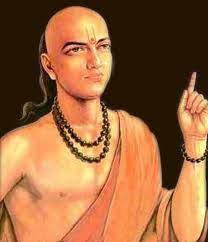


For his explicit mention of the relativity of motion, he also qualifies as a major early physicist. He is extremely well-known for his invention of the mathematical quantity 'zero' (0).
Aryabhata is the author of several treatises on mathematics and astronomy, some of which are lost.His major work, Aryabhatiya, a compendium of mathematics and astronomy, was extensively referred to in the Indian mathematical literature and has survived to modern times. The mathematical part of the Aryabhatiya covers arithmetic, algebra, plane trigonometry, and spherical trigonometry. It also contains continued fractions, quadratic equations, sums-of-power series, and a table of sines.
Brahmagupta (598-668 BCE)
Brahmagupta (c. 598 – c. 668 CE) was an Indian mathematician and astronomer. He is the author of two early works on mathematics and astronomy: the Brāhmasphuṭasiddhānta , a theoretical treatise, and the Khaṇḍakhādyaka , a more practical text.
Brahmagupta was the first to give rules to compute with zero. The texts composed by Brahmagupta were in elliptic verse in Sanskrit, as was common practice in Indian mathematics. As no proofs are given, it is not known how Brahmagupta's results were derived.

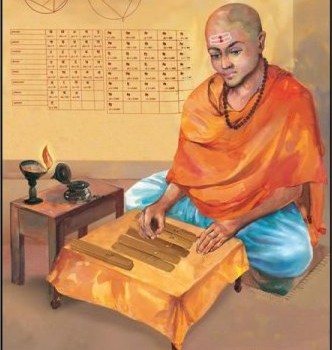

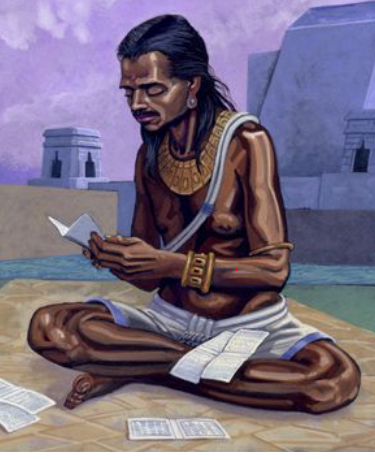
Most of his works are composed in elliptic verse, a common practice in Indian mathematics at the time, and consequently have something of a poetic ring to them. It seems likely that Brahmagupta’s works, especially his most famous text, the “Brahmasphutasiddhanta”, were brought by the 8th Century Abbasid caliph Al-Mansur to his newly founded centre of learning at Baghdad on the banks of the Tigris, providing an important link between Indian mathematics and astronomy and the nascent upsurge in science and mathematics in the Islamic world.
In his work on arithmetic, Brahmagupta explained how to find the cube and cube-root of an integer and gave rules facilitating the computation of squares and square roots. He also gave rules for dealing with five types of combinations of fractions.
Brahmagupta established the basic mathematical rules for dealing with zero (1 + 0 = 1; 1 – 0 = 1; and 1 x 0 = 0), although his understanding of division by zero was incomplete (he thought that 1 ÷ 0 = 0). Almost 500 years later, in the 12th Century, another Indian mathematician, Bhaskara II, showed that the answer should be infinity, not zero (on the grounds that 1 can be divided into an infinite number of pieces of size zero), an answer that was considered correct for centuries. However, this logic does not explain why 2 ÷ 0, 7 ÷ 0, etc, should also be zero – the modern view is that a number divided by zero is actually “undefined” (i.e. it doesn’t make sense).
Brahmagupta’s view of numbers as abstract entities, rather than just for counting and measuring, allowed him to make yet another huge conceptual leap which would have profound consequence for future mathematics. Previously, the sum 3 – 4, for example, was considered to be either meaningless or, at best, just zero. Brahmagupta, however, realized that there could be such a thing as a negative number, which he referred to as “debt” as a opposed to “property”. He expounded on the rules for dealing with negative numbers (e.g. a negative times a negative is a positive, a negative times a positive is a negative, etc).
Varāhamihira (505-587 BCE)
Varāhamihira (c. 505 – c. 587), also called Varāha or Mihira, was a Hindu astrologer, astronomer, and polymath who lived in Ujjain (Madhya Pradesh, India). He was born in the Avanti region, roughly corresponding to modern-day Malwa (part of Madhya Pradesh, India), to Adityadasa.
Varāhamihira's most notable work was the Brihat Samhita, an encyclopedic work on architecture, temples, planetary motions, eclipses, timekeeping, astrology, seasons, cloud formation, rainfall, agriculture, mathematics, gemology, perfumes and many other topics. According to Varahamihira, in some verses he was merely summarizing earlier existing literature on astronomy, Shilpa Sastra and temple architecture, yet his presentation of different theories and models of design are among the earliest texts that have survived.

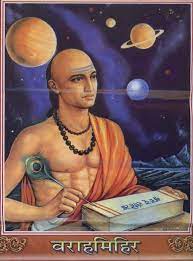


Varahamihira's main work is the book Pañcasiddhāntikā, which gives us information about older Indian texts which are now lost. The work is a treatise on mathematical astronomy and it summarises five earlier astronomical treatises by five authors, namely the Surya Siddhanta, Romaka Siddhanta, Paulisa Siddhanta, Vasishtha Siddhanta and Paitamaha Siddhanta. It is a compendium of Vedanga Jyotisha as well as Hellenistic astronomy (withGreek, Egyptian and Roman elements). Varahamihira was the first one to mention that the Ayanāṃśa, or the shifting of the equinox, is 50.32 arc seconds per year.
Another important contribution of Varahamihira is the encyclopedic Brihat-Samhita. Although the book is mostly about divination, it also includes a wide range of subjects other than divination. It covers wide-ranging subjects of human interest, including astronomy, planetary movements, eclipses, rainfall, clouds, architecture, growth of crops, manufacture of perfume, matrimony and domestic relations. The volume expounds on gemstone evaluation criterion found in the Garuda Purana, and elaborates on the sacred Nine Pearls from the same text. It contains 106 chapters and is known as the "great compilation".