


Greatest Scientists of All Time
- Space Corp Technologies

- Sep 1, 2021
- 20 min read
"The best thing about being a scientist, is that you never have to grow up !" -Neil Degrasse Tyson
A scientist, is someone who studies, and analyses scientific principles, and try to find answers to questions that do not have an answer. It is important for all the aspiring scientists to make their basics and fundamentals as clear as possible. However, with the pandemic on the rise, this ‘quality’ of scientists is being compromised.
You cannot learn all about science by online lectures; you need to have critical and analytical thinking skills. You need to think outside the box, make keen observations and question everything that comes to your mind. Is that possible in the long hours of online classes ? The simple answer is NO !
It is pretty clear that the next generation of scientists won’t have the same quality that our generation contains. They would be habitual with doing things online, heavily relying on technologies and many other factors.
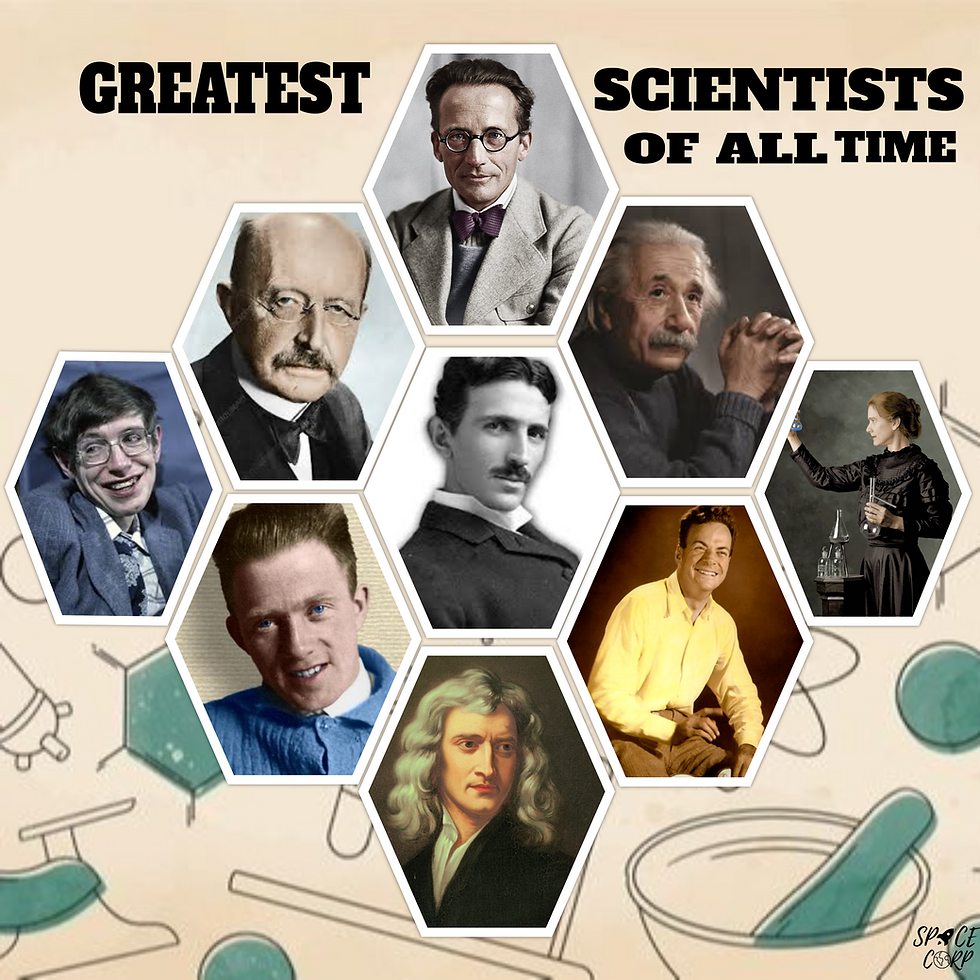
Meanwhile, let us talk about the best generation of scientists that have walked the face of Earth. From the early 15th Century to the late 20th Century, we were blessed to have some of the brilliant minds amongst us. Let us know about the ones who made some major breakthroughs in their lives as scientists. These are -
1. Albert Einstein (1879-1955)
Albert Einstein – The name is enough to know who we are talking about. One of the most sophisticated and brilliant minds of the 19th and the early 20th Century, he was regarded as ‘one of the greatest physicists of all time’.
Albert was always what we call a ‘child prodigy’. He excelled at math and physics from a young age, reaching a mathematical level year ahead of his peers. The 12-year-old Einstein taught himself algebra and Euclidean geometry over a single summer. He also independently discovered his own original proof of the Pythagorean theorem at age 12. Einstein started teaching himself calculus at 12, and as a 14-year-old he says he had "mastered integral and differential calculus".
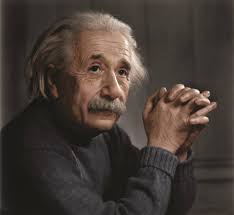


However, this was not even close to what he did, later in his life. In 1905, a year sometimes described as his annus mirabilis ('miracle year'), Einstein published four groundbreaking papers. These outlined the theory of the photoelectric effect, explained Brownian motion, introduced special relativity, and demonstrated mass-energy equivalence.
Einstein thought that the laws of classical mechanics could no longer be reconciled with those of the electromagnetic field, which led him to develop his special theory of relativity. He then extended the theory to gravitational fields; he published a paper on general relativity in 1916, introducing his theory of gravitation.
In 1917, he applied the general theory of relativity to model the structure of the universe. He continued to deal with problems of statistical mechanics and quantum theory, which led to his explanations of particle theory and the motion of molecules. He also investigated the thermal properties of light and the quantum theory of radiation, which laid the foundation of the photon theory of light.
However, for much of the later part of his career, he worked on two ultimately unsuccessful endeavors. First, despite his great contributions to quantum mechanics, he opposed what it evolved into, objecting that nature "does not play dice". Second, he attempted to devise a unified field theory by generalizing his geometric theory of gravitation to include electromagnetism. As a result, he became increasingly isolated from the mainstream of modern physics.
2. Sir Isaac Newton (1642-1727)
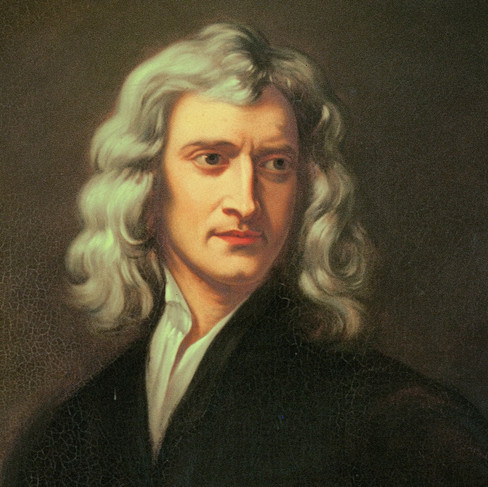
Another name that needs no introduction – Sir Isaac Newton. We all have heard about the famous story ‘Newton and the apple’ that led to the discovery of gravity. However, that was not all he did.
Sir Isaac Newton was an English mathematician, physicist and astronomer, who is widely recognised as one of the greatest mathematicians and most influential scientists of all time. His book Philosophiæ Naturalis Principia Mathematica (Mathematical Principles of Natural Philosophy), first published in 1687, established classical mechanics. Newton also made seminal contributions to optics, and shares credit with German mathematician Gottfried Wilhelm Leibniz for developing infinitesimal calculus.



In Principia, Newton formulated the laws of motion and universal gravitation that formed the dominant scientific viewpoint until it was superseded by the theory of relativity. Newton used his mathematical description of gravity to derive Kepler's laws of planetary motion, account for tides, the trajectories of comets, the precession of the equinoxes and other phenomena, eradicating doubt about the Solar System's heliocentricity. He demonstrated that the motion of objects on Earth and celestial bodies could be accounted for by the same principles.
In June 1661, he was admitted to Trinity College, Cambridge. At that time, the college's teachings were based on those of Aristotle, whom Newton supplemented with modern philosophers such as Descartes, and astronomers such as Galileo and Thomas Street, through whom he learned of Kepler's work.
He set down in his notebook a series of "Quaestiones" about mechanical philosophy as he found it. In 1665, he discovered the generalized binomial theorem and began to develop a mathematical theory that later became calculus. Soon after Newton had obtained his BA degree in August 1665, the university temporarily closed as a precaution against the Great Plague. Although he had been undistinguished as a Cambridge student, Newton's private studies at his home in Woolsthorpe over the subsequent two years saw the development of his theories on calculus, optics, and the law of gravitation.
Newton's work has been said "to distinctly advance every branch of mathematics then studied". His work on the subject, usually referred to as fluxions or calculus, seen in a manuscript of October 1666, is now published among Newton's mathematical papers. His work De analysi per aequationes numero terminorum infinitas, sent by Isaac Barrow to John Collins in June 1669, was identified by Barrow in a letter sent to Collins that August as the work "of an extraordinary genius and proficiency in these things".
Newton later became involved in a dispute with Leibniz over priority in the development of calculus (the Leibniz–Newton calculus controversy). Most modern historians believe that Newton and Leibniz developed calculus independently, although with very different mathematical notations.
From 1670 to 1672, Newton lectured on optics. During this period he investigated the refraction of light, demonstrating that the multi-colored spectrum produced by a prism could be recomposed into white light by a lens and a second prism. Modern scholarship has revealed that Newton's analysis and re-synthesis of white light owes a debt to corpuscular alchemy.
He showed that coloured light does not change its properties by separating out a coloured beam and shining it on various objects, and that regardless of whether reflected, scattered, or transmitted, the light remains the same colour. Thus, he observed that colour is the result of objects interacting with already-coloured light rather than objects generating the colour themselves. This is known as Newton's theory of colour.
3. Nikola Tesla (1856-1943)
Nikola Tesla has been regarded as a ‘genius beyond his years’. He was the perfect example of ‘the world wasn’t ready for this genius’. By profession, Tesla was a mechanical/electrical engineer, and a futurist, known for his contributions in the modern theory of alternating current.
Tesla studied engineering and physics in the 1870s without receiving a degree, gaining practical experience in the early 1880s working in telephony and at Continental Edison in the new electric power industry. In 1884 he emigrated to the United States, where he became a naturalized citizen. He worked for a short time at the Edison Machine Works in New York City before he struck out on his own.
With the help of partners to finance and market his ideas, Tesla set up laboratories and companies in New York to develop a range of electrical and mechanical devices. His alternating current (AC) induction motor and related polyphase AC patents, licensed by Westinghouse Electric in 1888, earned him a considerable amount of money and became the cornerstone of the polyphase system which that company eventually marketed.

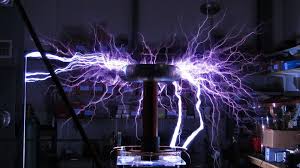
Attempting to develop inventions he could patent and market, Tesla conducted a range of experiments with mechanical oscillators/generators, electrical discharge tubes, and early X-ray imaging. He also built a wireless-controlled boat, one of the first-ever exhibited. Tesla became well known as an inventor and demonstrated his achievements to celebrities and wealthy patrons at his lab, and was noted for his showmanship at public lectures.
Throughout the 1890s, Tesla pursued his ideas for wireless lighting and worldwide wireless electric power distribution in his high-voltage, high-frequency power experiments in New York and Colorado Springs. In 1893, he made pronouncements on the possibility of wireless communication with his devices. Tesla tried to put these ideas to practical use in his unfinished Wardenclyffe Tower project, an intercontinental wireless communication and power transmitter, but ran out of funding before he could complete it.
After Wardenclyffe, Tesla experimented with a series of inventions in the 1910s and 1920s with varying degrees of success. Having spent most of his money, Tesla lived in a series of New York hotels, leaving behind unpaid bills. He died in New York City in January 1943. Tesla's work fell into relative obscurity following his death, until 1960, when the General Conference on Weights and Measures named the SI unit of magnetic flux density the tesla in his honor. There has been a resurgence in popular interest in Tesla since the 1990s.
4. Max Planck (1858-1947)
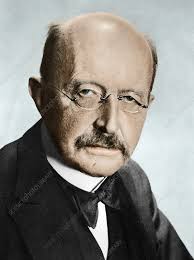
Max Planck, a renowned name in the field of physics, but not many people outside of the scientific community know about him. He was a German theoretical physicist whose discovery of energy quanta won him the Nobel Prize in Physics in 1918.
Planck made many substantial contributions to theoretical physics, but his fame as a physicist rests primarily on his role as the originator of quantum theory, which revolutionized human understanding of atomic and subatomic processes. In 1948, the German scientific institution Kaiser Wilhelm Society (of which Planck was twice president) was renamed Max Planck Society (MPS). The MPS now includes 83 institutions representing a wide range of scientific directions.
The Munich physics professor Philipp von Jolly advised Planck against going into physics, saying, "In this field, almost everything is already discovered, and all that remains is to fill a few holes." Planck replied that he did not wish to discover new things, but only to understand the known fundamentals of the field, and so began his studies in 1874 at the University of Munich. Under Jolly's supervision, Planck performed the only experiments of his scientific career, studying the diffusion of hydrogen through heated platinum, but transferred to theoretical physics.


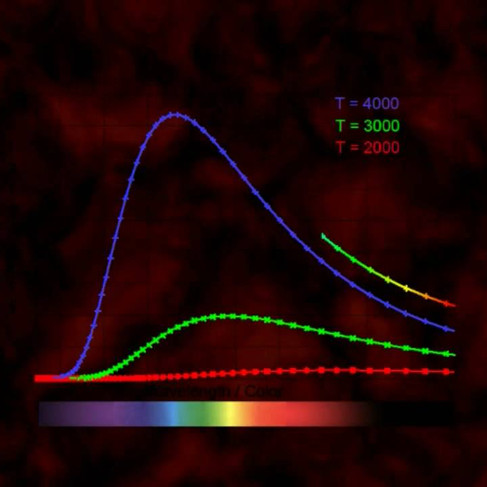
In 1894, Planck turned his attention to the problem of black-body radiation. The problem had been stated by Kirchhoff in 1859: "how does the intensity of the electromagnetic radiation emitted by a black body (a perfect absorber, also known as a cavity radiator) depend on the frequency of the radiation (i.e., the color of the light) and the temperature of the body?".
Planck revised his approach, deriving the first version of the famous Planck black-body radiation law, which described the experimentally observed black-body spectrum well. It was first proposed in a meeting of the DPG on 19 October 1900 and published in 1901. This first derivation did not include energy quantisation, and did not use statistical mechanics, to which he held an aversion.
In November 1900 Planck revised this first approach, relying on Boltzmann's statistical interpretation of the second law of thermodynamics as a way of gaining a more fundamental understanding of the principles behind his radiation law. As Planck was deeply suspicious of the philosophical and physical implications of such an interpretation of Boltzmann's approach, his recourse to them was, as he later put it, "an act of despair ... I was ready to sacrifice any of my previous convictions about physics".
The central assumption behind his new derivation, presented to the DPG on 14 December 1900, was the supposition, now known as the Planck postulate, that electromagnetic energy could be emitted only in quantized form, in other words, the energy could only be a multiple of an elementary unit:

At first Planck considered that quantisation was only "a purely formal assumption - actually I did not think much about it"; nowadays this assumption, incompatible with classical physics, is regarded as the birth of quantum physics and the greatest intellectual accomplishment of Planck's career (Ludwig Boltzmann had been discussing in a theoretical paper in 1877 the possibility that the energy states of a physical system could be discrete).
The discovery of Planck's constant enabled him to define a new universal set of physical units (such as the Planck length and the Planck mass), all based on fundamental physical constants upon which much of quantum theory is based. In recognition of Planck's fundamental contribution to a new branch of physics, he was awarded the Nobel Prize in Physics for 1918.
5. Stephen Hawking (1942-2018)
Stephen Hawking was one of the most inspirational scientists, who we were lucky enough to see alive. He was diagnosed with a life-threatening disease, and the doctors gave him 2 years of time till his death, but he lived for 50+ years, and how he lived!
Hawking was born in Oxford into a family of doctors. He began his university education at University College, Oxford, in October 1959 at the age of 17, where he received a first-class BA degree in physics. He began his graduate work at Trinity Hall, Cambridge, in October 1962, where he obtained his PhD degree in applied mathematics and theoretical physics, specializing in general relativity and cosmology in March 1966.
In 1963, Hawking was diagnosed with an early-onset slow-progressing form of motor neurone disease that gradually paralyzed him over the decades. After the loss of his speech, he communicated through a speech-generating device initially through use of a handheld switch, and eventually by using a single cheek muscle.
Hawking's scientific works included a collaboration with Roger Penrose on gravitational singularity theorems in the framework of general relativity and the theoretical prediction that black holes emit radiation, often called Hawking radiation. Initially, Hawking radiation was controversial.
By the late 1970s and following the publication of further research, the discovery was widely accepted as a significant breakthrough in theoretical physics. Hawking was the first to set out a theory of cosmology explained by a union of the general theory of relativity and quantum mechanics. He was a vigorous supporter of the many-worlds interpretation of quantum mechanics.
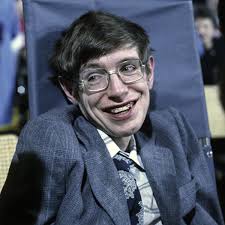

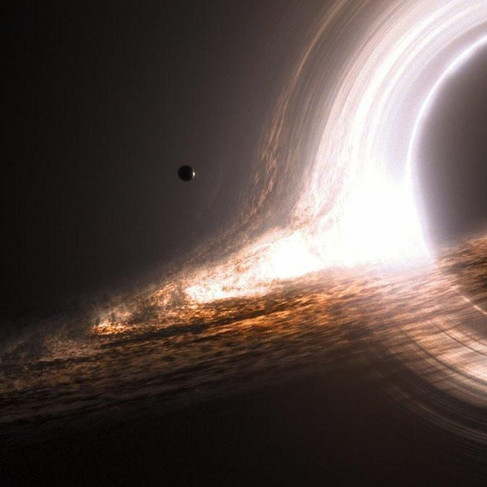
Hawking achieved commercial success with several works of popular science in which he discussed his theories and cosmology in general. His book, “A Brief History of Time” appeared on the Sunday Times bestseller list for a record-breaking 237 weeks. Hawking was a Fellow of the Royal Society, a lifetime member of the Pontifical Academy of Sciences, and a recipient of the Presidential Medal of Freedom, the highest civilian award in the United States.
In 2002, Hawking was ranked number 25 in the BBC's poll of the 100 Greatest Britons. He died on 14 March 2018 at the age of 76, after living with motor neurone disease for more than 50 years.
In his work, and in collaboration with Penrose, Hawking extended the singularity theorem concepts first explored in his doctoral thesis. This included not only the existence of singularities but also the theory that the universe might have started as a singularity. Their joint essay was the runner-up in the 1968 Gravity Research Foundation competition.
In 1970, they published a proof that if the universe obeys the general theory of relativity and fits any of the models of physical cosmology developed by Alexander Friedmann, then it must have begun as a singularity. In 1969, Hawking accepted a specially created Fellowship for Distinction in Science to remain at Caius.
In 1970, Hawking postulated what became known as the second law of black hole dynamics, that the event horizon of a black hole can never get smaller. With James M. Bardeen and Brandon Carter, he proposed the four laws of black hole mechanics, drawing an analogy with thermodynamics. To Hawking's irritation, Jacob Bekenstein, a graduate student of John Wheeler, went further—and ultimately correctly—to apply thermodynamic concepts literally.
In the early 1970s, Hawking's work with Carter, Werner Israel, and David C. Robinson strongly supported Wheeler's no-hair theorem, one that states that no matter what the original material from which a black hole is created, it can be completely described by the properties of mass, electrical charge and rotation. His essay titled "Black Holes" won the Gravity Research Foundation Award in January 1971. Hawking's first book, The Large Scale Structure of Space-Time, written with George Ellis, was published in 1973.
Beginning in 1973, Hawking moved into the study of quantum gravity and quantum mechanics. His work in this area was spurred by a visit to Moscow and discussions with Yakov Borisovich Zel'dovich and Alexei Starobinsky, whose work showed that according to the uncertainty principle, rotating black holes emit particles. To Hawking's annoyance, his much-checked calculations produced findings that contradicted his second law, which claimed black holes could never get smaller, and supported Bekenstein's reasoning about their entropy.
6. Madame Marie Curie (1867-1934)
Madame Curie, real name Marie Curie was a pioneer in the field of radioactivity. She was the first woman to win a Nobel Prize, the first person and the only woman to win the Nobel Prize twice, and the only person to win the Nobel Prize in two scientific fields.
She studied at Warsaw's clandestine Flying University and began her practical scientific training in Warsaw. In 1891, aged 24, she followed her elder sister Bronisława to study in Paris, where she earned her higher degrees and conducted her subsequent scientific work.
In 1895 she married the French physicist Pierre Curie, and she shared the 1903 Nobel Prize in Physics with him and with the physicist Henri Becquerel for their pioneering work developing the theory of "radioactivity"—a term she coined. In 1906 Pierre Curie died in a Paris street accident. Marie won the 1911 Nobel Prize in Chemistry for her discovery of the elements polonium and radium, using techniques she invented for isolating radioactive isotopes.
In addition to her Nobel Prizes, she has received numerous other honours and tributes; in 1995 she became the first woman to be entombed on her own merits in Paris' Panthéon, and Poland declared 2011 as the Year of Marie Curie during the International Year of Chemistry. She is the subject of numerous biographical works, where she is also known as Madame Curie.
In 1895, Wilhelm Roentgen discovered the existence of X-rays, though the mechanism behind their production was not yet understood. In 1896, Henri Becquerel discovered that uranium salts emitted rays that resembled X-rays in their penetrating power.
He demonstrated that this radiation, unlike phosphorescence, did not depend on an external source of energy but seemed to arise spontaneously from uranium itself. Influenced by these two important discoveries, Curie decided to look into uranium rays as a possible field of research for a thesis.



She used an innovative technique to investigate samples. Fifteen years earlier, her husband and his brother had developed a version of the electrometer, a sensitive device for measuring electric charge. Using her husband's electrometer, she discovered that uranium rays caused the air around a sample to conduct electricity.
Using this technique, her first result was the finding that the activity of the uranium compounds depended only on the quantity of uranium present. She hypothesized that the radiation was not the outcome of some interaction of molecules but must come from the atom itself. This hypothesis was an important step in disproving the assumption that atoms were indivisible.
In July 1898, Curie and her husband published a joint paper announcing the existence of an element they named "polonium", in honour of her native Poland, which would for another twenty years remain partitioned among three empires (Russian, Austrian, and Prussian). On 26 December 1898, the Curies announced the existence of a second element, which they named "radium", from the Latin word for "ray". In the course of their research, they also coined the word "radioactivity".
To prove their discoveries beyond any doubt, the Curies sought to isolate polonium and radium in pure form. The Curies undertook the arduous task of separating out radium salt by differential crystallization. From a tonne of pitchblende, one-tenth of a gram of radium chloride was separated in 1902. In 1910, she isolated pure radium metal. She never succeeded in isolating polonium, which has a half-life of only 138 days.
Between 1898 and 1902, the Curies published, jointly or separately, a total of 32 scientific papers, including one that announced that, when exposed to radium, diseased, tumour-forming cells were destroyed faster than healthy cells.
Because of their levels of radioactive contamination, her papers from the 1890s are considered too dangerous to handle. Even her cookbooks are highly radioactive. Her papers are kept in lead-lined boxes, and those who wish to consult them must wear protective clothing. In her last year, she worked on a book, Radioactivity, which was published posthumously in 1935.
7. Richard Feynman (1918-1988)
Richard Feynman was one of the best science communicators of his time. The young Feynman was heavily influenced by his father, who encouraged him to ask questions to challenge orthodox thinking, and who was always ready to teach Feynman something new. From his mother, he gained the sense of humor that he had throughout his life. As a child, he had a talent for engineering, maintained an experimental laboratory in his home, and delighted in repairing radios. This radio repairing was probably the first job Feynman had, and during this time he showed early signs of an aptitude for his later career in theoretical physics, when he would analyze the issues theoretically and arrive at the solutions. When he was in grade school, he created a home burglar alarm system while his parents were out for the day running errands.
He was known for his work in the path integral formulation of quantum mechanics, the theory of quantum electrodynamics, the physics of the superfluidity of supercooled liquid helium, as well as his work in particle physics for which he proposed the parton model. For contributions to the development of quantum electrodynamics, Feynman received the Nobel Prize in Physics in 1965 jointly with Julian Schwinger and Shin'ichirō Tomonaga.



When Feynman was 15, he taught himself trigonometry, advanced algebra, infinite series, analytic geometry, and both differential and integral calculus. Before entering college, he was experimenting with and deriving mathematical topics such as the half-derivative using his own notation. He created special symbols for logarithm, sine, cosine and tangent functions so they did not look like three variables multiplied together, and for the derivative, to remove the temptation of canceling out the d's in d/dx.
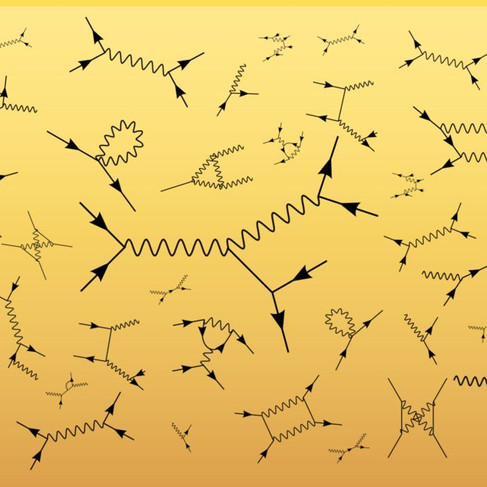
Feynman developed a widely used pictorial representation scheme for the mathematical expressions describing the behavior of subatomic particles, which later became known as Feynman diagrams. During his lifetime, Feynman became one of the best-known scientists in the world. In a 1999 poll of 130 leading physicists worldwide by the British journal Physics World, he was ranked the seventh-greatest physicist of all time.
He assisted in the development of the atomic bomb during World War II and became known to a wide public in the 1980s as a member of the Rogers Commission, the panel that investigated the Space Shuttle Challenger disaster. Along with his work in theoretical physics, Feynman has been credited with pioneering the field of quantum computing and introducing the concept of nanotechnology. He held the Richard C. Tolman professorship in theoretical physics at the California Institute of Technology.
Feynman was a keen popularizer of physics through both books and lectures, including a 1959 talk on top-down nanotechnology called There's Plenty of Room at the Bottom and the three-volume publication of his undergraduate lectures, The Feynman Lectures on Physics. Feynman also became known through his autobiographical books Surely You're Joking, Mr. Feynman! and What Do You Care What Other People Think?, and books written about him such as Tuva or Bust! by Ralph Leighton and the biography Genius: The Life and Science of Richard Feynman by James Gleick.
8. Erwin Schrödinger (1887-1961)
The only phrase by which people recognize Erwin Schrödinger is by – ‘Schrödinger’s Cat: Dead or Alive’. Other than that, people rarely know the genius he was, and the substantial contributions he made to the field of quantum mechanics. Firstly, he was the one to use the wave-particle duality as a reason to develop a separate branch of physics that would deal with the De-Broglie ‘Matter Waves’. For that, he used the operator algebra, and higher order differential calculus to form ‘Wave Mechanics’, which was later coined as ‘Quantum Mechanics’, as it was later discovered to be more about quantization, and less about waves.
In addition, he wrote many works on various aspects of physics: statistical mechanics and thermodynamics, physics of dielectrics, colour theory, electrodynamics, general relativity, and cosmology, and he made several attempts to construct a unified field theory. In his book What Is Life? Schrödinger addressed the problems of genetics, looking at the phenomenon of life from the point of view of physics. He paid great attention to the philosophical aspects of science, ancient, and oriental philosophical concepts, ethics, and religion. He also wrote on philosophy and theoretical biology. He is also known for his "Schrödinger's cat" thought experiment.

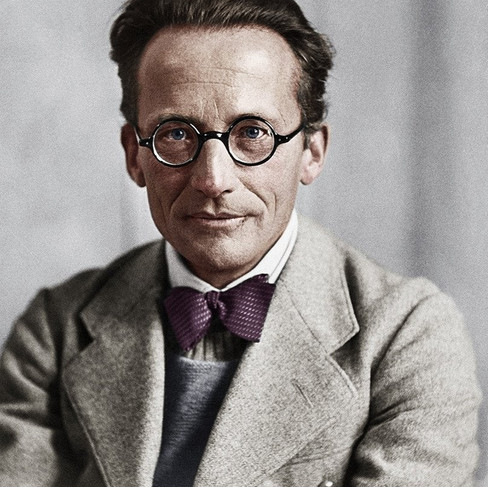


Early in his life, Schrödinger experimented in the fields of electrical engineering, atmospheric electricity, and atmospheric radioactivity, but he usually worked with his former teacher Franz Exner. He also studied vibrational theory, the theory of Brownian motion, and mathematical statistics.
In 1912, at the request of the editors of the Handbook of Electricity and Magnetism, Schrödinger wrote an article titled Dieelectrism. That same year, Schrödinger gave a theoretical estimate of the probable height distribution of radioactive substances, which is required to explain the observed radioactivity of the atmosphere, and in August 1913 executed several experiments in Zeehame that confirmed his theoretical estimate and those of Victor Franz Hess. For this work, Schrödinger was awarded the 1920 Haitinger Prize (Haitinger-Preis) of the Austrian Academy of Sciences.
Other experimental studies conducted by the young researcher in 1914 were checking formulas for capillary pressure in gas bubbles and the study of the properties of soft beta radiation produced by gamma rays striking metal surface. The last work he performed together with his friend Fritz Kohlrausch. In 1919, Schrödinger performed his last physical experiment on coherent light and subsequently focused on theoretical studies.
In January 1926, Schrödinger published in Annalen der Physik the paper "Quantisierung als Eigenwertproblem" (Quantization as an Eigenvalue Problem) on wave mechanics and presented what is now known as the Schrödinger equation. In this paper, he gave a "derivation" of the wave equation for time-independent systems and showed that it gave the correct energy eigenvalues for a hydrogen-like atom. This paper has been universally celebrated as one of the most important achievements of the twentieth century and created a revolution in most areas of quantum mechanics and indeed of all physics and chemistry.
A second paper was submitted just four weeks later that solved the quantum harmonic oscillator, rigid rotor, and diatomic molecule problems and gave a new derivation of the Schrödinger equation.
A third paper, published in May, showed the equivalence of his approach to that of Heisenberg and gave the treatment of the Stark effect.
A fourth paper in this series showed how to treat problems in which the system changes with time, as in scattering problems. In this paper he introduced a complex solution to the wave equation in order to prevent the occurrence of fourth and sixth order differential equations. (This was arguably the moment when quantum mechanics switched from real to complex numbers.)
When he introduced complex numbers in order to lower the order of the differential equations, something magical happened, and all of wave mechanics was at his feet.
Schrödinger described how one could, in principle, create a superposition in a large-scale system by making it dependent on a quantum particle that was in a superposition. He proposed a scenario with a cat in a locked steel chamber, wherein the cat's life or death depended on the state of a radioactive atom, whether it had decayed and emitted radiation or not. According to Schrödinger, the Copenhagen interpretation implies that the cat remains both alive and dead until the state has been observed. Schrödinger did not wish to promote the idea of dead-and-live cats as a serious possibility; on the contrary, he intended the example to illustrate the absurdity of the existing view of quantum mechanics.
However, since Schrödinger's time, other interpretations of the mathematics of quantum mechanics have been advanced by physicists, some of which regard the "alive and dead" cat superposition as quite real.
9. Werner Heisenberg (1901-1976)
Werner Heisenberg, just like Max Planck, was another pioneer in the early developments of quantum mechanics. The scientific community regards him highly, but the general public know very less of him. He used the matrix mechanics to overcome his very famous ‘Uncertainty Principle’.
He published his work in 1925 in a breakthrough paper. In the subsequent series of papers with Max Born and Pascual Jordan, during the same year, this matrix formulation of quantum mechanics was substantially elaborated. He is known for the uncertainty principle, which he published in 1927. Heisenberg was awarded the 1932 Nobel Prize in Physics "for the creation of quantum mechanics".
Heisenberg also made important contributions to the theories of the hydrodynamics of turbulent flows, the atomic nucleus, ferromagnetism, cosmic rays, and subatomic particles. He was a principal scientist in the German nuclear weapons program during World War II. He was also instrumental in planning the first West German nuclear reactor at Karlsruhe, together with a research reactor in Munich, in 1957.
Following World War II, he was appointed director of the Kaiser Wilhelm Institute for Physics, which soon thereafter was renamed the Max Planck Institute for Physics. He was director of the institute until it was moved to Munich in 1958. He then became director of the Max Planck Institute for Physics and Astrophysics from 1960 to 1970.
Heisenberg was also president of the German Research Council, chairman of the Commission for Atomic Physics, chairman of the Nuclear Physics Working Group, and president of the Alexander von Humboldt Foundation.

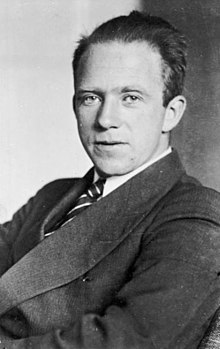

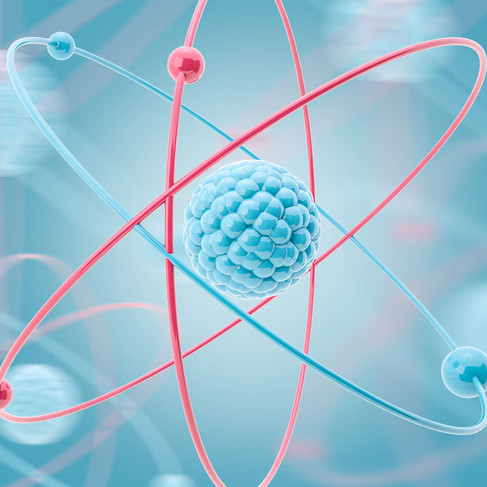
Heisenberg recounted the philosophical conversations with his fellow students and teachers on understanding the atom while receiving his scientific training in Munich, Göttingen and Copenhagen. Heisenberg would later state that “My mind was formed by studying philosophy, Plato and that sort of thing" and that "Modern physics has definitely decided in favor of Plato. In fact, the smallest units of matter are not physical objects in the ordinary sense; they are forms, ideas which can be expressed unambiguously only in mathematical language.
He studied physics and mathematics from 1920 to 1923 at the Ludwig Maximilian University of Munich and the Georg-August University of Göttingen. At Munich, he studied under Arnold Sommerfeld and Wilhelm Wien. At Göttingen, he studied physics with Max Born and James Franck and mathematics with David Hilbert. He received his doctorate in 1923 at Munich under Sommerfeld. At Göttingen, under Born, he completed his habilitation in 1924 with a Habilitationsschrift (habilitation thesis) on the anomalous Zeeman effect.
Because Sommerfeld had a sincere interest in his students and knew of Heisenberg's interest in Niels Bohr's theories on atomic physics, Sommerfeld took Heisenberg to Göttingen to attend the Bohr Festival of June 1922. At the event, Bohr was a guest lecturer and gave a series of comprehensive lectures on quantum atomic physics. There, Heisenberg met Bohr for the first time, and it had a significant and continuing effect on him.
The development of quantum mechanics, and the apparent contradictory implications in regard to what is "real" had profound philosophical implications, including what scientific observations truly mean. In contrast to Albert Einstein and Louis de Broglie, who were realists who believed that particles had an objectively true momentum and position at all times (even if both could not be measured), Heisenberg was an anti-realist, arguing that direct knowledge of what is "real" was beyond the scope of science.
Writing in his book The Physicist's Conception of Nature, Heisenberg argued that ultimately, we only can speak of the knowledge (numbers in tables) which describe something about particles but we can never have any "true" access to the particles themselves.

Ok